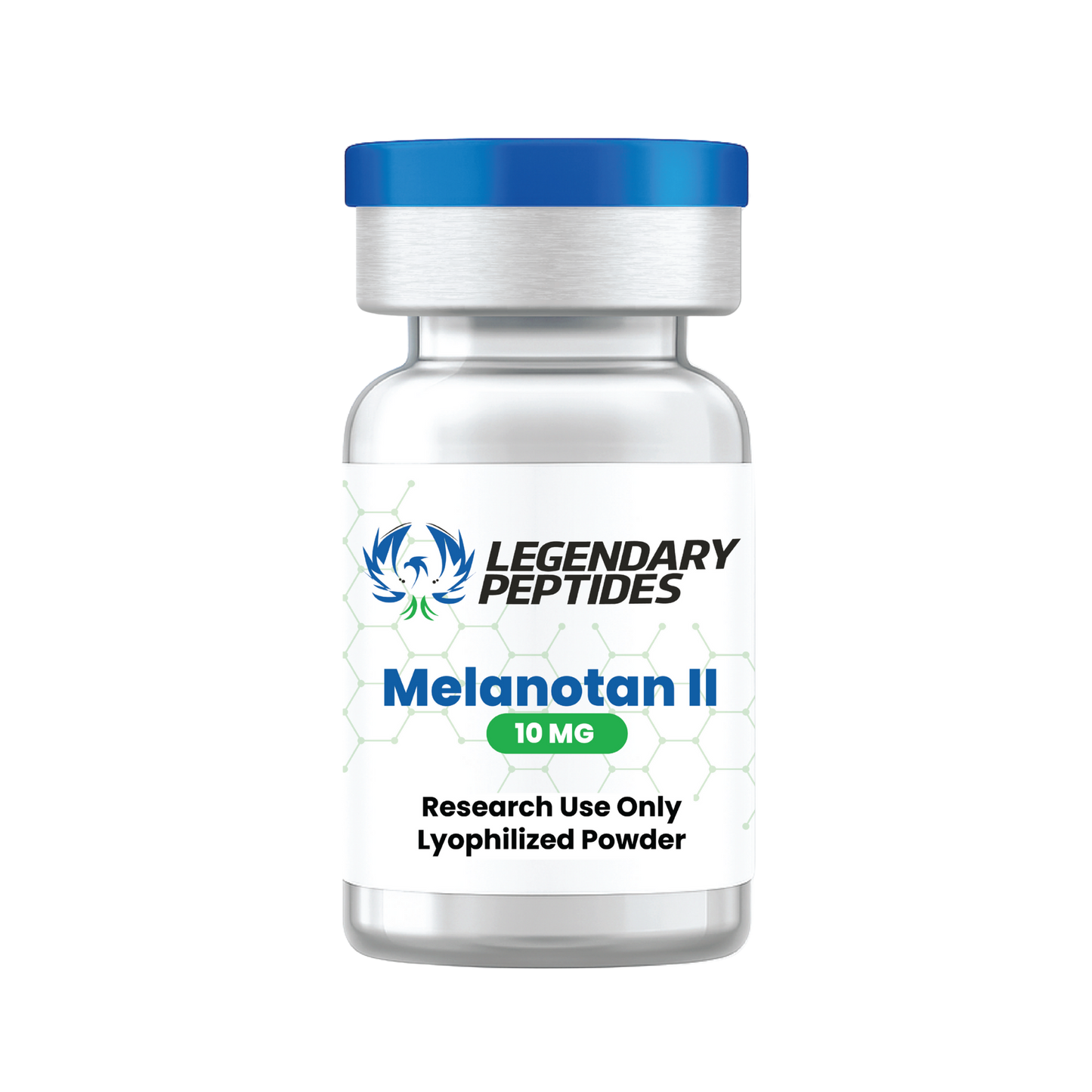
Melanotan II 10mg
Melanotan II 10mg
Couldn't load pickup availability
Melanotan II — Legendary Pigmentation and Performance Research
Melanotan II (MT-II) stands as a hallmark in pigmentation and melanocortin research — a synthetic analog of the naturally occurring peptide α-MSH (alpha-melanocyte–stimulating hormone). Studied for its diverse physiological effects, Melanotan II is recognized for its ability to stimulate skin pigmentation, influence appetite pathways, and modulate sexual function through the melanocortin system.
• Skin Pigmentation and UV Protection
Melanotan II has been extensively studied for its ability to activate melanocortin receptors that stimulate melanin production. Research suggests this increased pigmentation may support enhanced photoprotection and a more even, darker complexion without excessive UV exposure.
• Melanocortin System Activation
MT-II interacts with the MC1R, MC3R, MC4R, and MC5R receptors — pathways involved in energy balance, appetite regulation, inflammation control, and sexual function. This broad receptor activity makes it a key compound in studies exploring whole-body melanocortin signaling.
• Appetite and Weight Regulation
Research indicates that Melanotan II may influence appetite through MC4R activation, potentially reducing food intake and supporting metabolic regulation — positioning it within broader metabolic and body-composition studies.
• Libido and Sexual Function Support
Melanotan II has been investigated for its potential to enhance libido and sexual performance by stimulating melanocortin receptors associated with arousal pathways, making it an area of interest in sexual health research.
Together, these effects define Melanotan II as a Legendary peptide for pigmentation, metabolic signaling, and performance modulation — inspiring researchers to explore the intricate connections between melanocortin pathways, physiological balance, and aesthetic enhancement.
For Research Use Only. Not for Human Consumption.
| FORM | Lyophilized Powder |
| VIAL SIZE | 3 mL |
| SOURCE | View on PubChem |
| COA | View COA |